
Con este fotorreportaje, Jacobo García Ochoa pone el broche final a su formación en el Grado de Periodismo de la Facultad de Filosofía y Letras y cierra también su etapa como colaborador de Entremedios. Su trabajo nos traslada a Cluj-Napoca (Rumanía), una ciudad donde conviven cerca de una veintena de confesiones religiosas y en la que la fe sigue formando parte de la vida cotidiana, incluso en un contexto marcado por la secularización. A través de una mirada cercana y humana, el autor explora cómo creyentes de distintas tradiciones comparten ritos, emociones y comunidades, demostrando que, más allá de los nombres con los que invocan a Dios, todos buscan dar un mismo sentido trascendente a la existencia. Gracias por compartirlas.
Una experiencia en que une su pasión por el fotoperiodismo, con unas imágenes llenas de simbolismo, con una narración periodística y de reflexión. Un cierre de imágenes para el curso 2025-2026.
Autor: Jacobo García Ochoa
Romania is the most religious country in Europe. In 2021, 91% of the population claimed to profess a faith. However, the intensification of the secularization process in the West and demographic changes are leading to a transformation in the religious sentiments of the population.
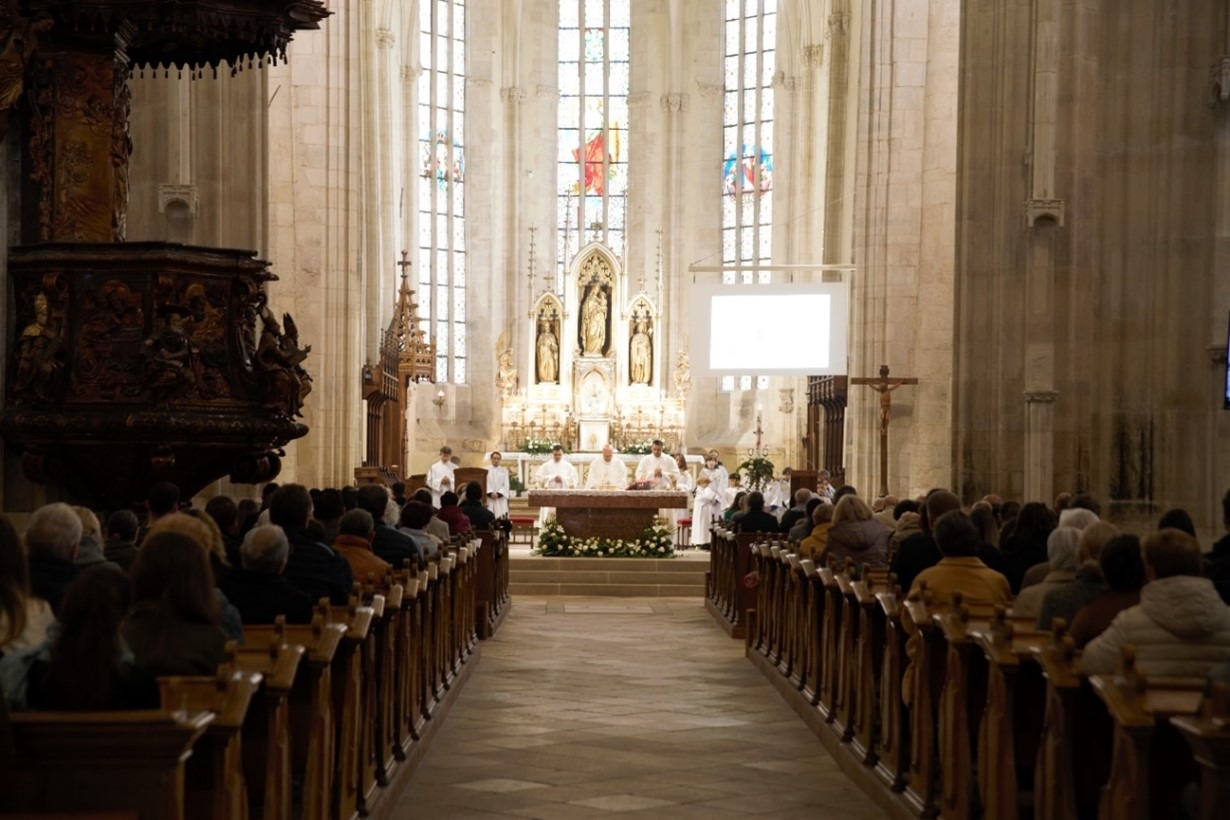
St. Michael’s Roman Catholic Church, Sunday Mass
Between 1992 and 2021, the Romanian Orthodox Church —the country’s main religion with 14 million followers (73% of the population)— has reduced its membership by 30%. And, although the number of people without a religion is very small —barely exceeding 150,000— it has increased by 570%. Furthermore, 14% of Romanians prefer not to adhere to any faith. Meanwhile, the Pentecostal Neo-Protestant movement has increased its number of followers by 90%, and Islam now has 30% more believers.
Cluj-Napoca is the second largest city in Romania. Its location in the heart of the Transylvania region gives it great ethnic and religious diversity, reflected in the distribution of its population: Romanian (71%), Hungarian (12%), and other smaller communities such as the Roma (0.61%) and German (0.15%).
According to the 2021 Population and Housing Census, the population of the municipality of Cluj-Napoca is distributed as follows according to religion: Orthodox (56%), Reformed (8%), Roman Catholic (4%), Greek Catholic (4%), etc. Nearly twenty religious groups coexist in a city with fewer than 300,000 inhabitants.
In a world where it is illogical for religion to continue to exist (as Reformed seminarian József told me), a large part of the population still prays. This photo report presents the history of religion in Cluj. And not just one, but all of them, for it has been seen that there are no differences among believers. When praying, each one uses different nouns, but the same verbs.
A WHOLE LIFE
From birth to death. The life of a believer develops as they acquire the religious sentiment of their community and fulfill the stages established by their tradition. Some even decide to make religion their vocation, serving as a spiritual guide to the rest of the faithful.
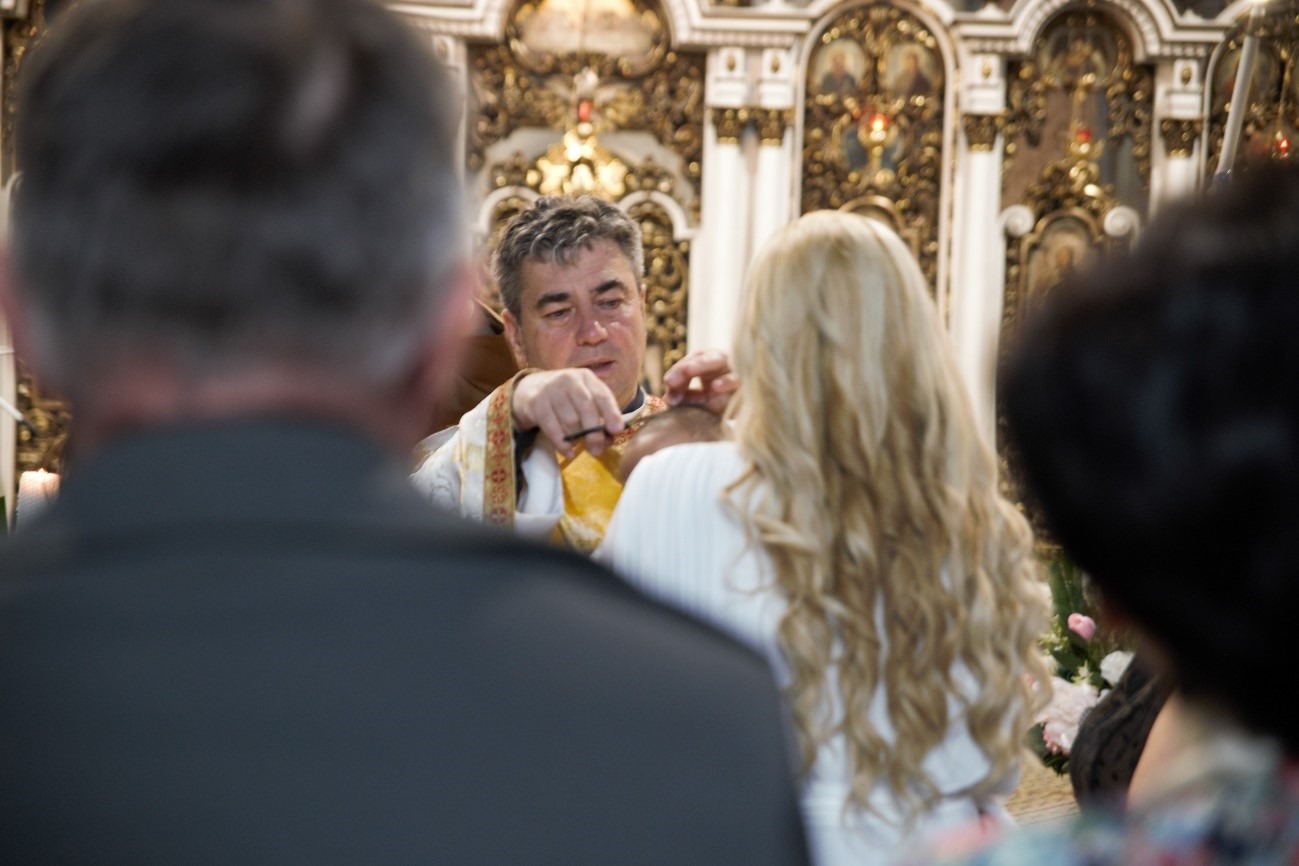
The priest performs the tonsure of the infant during baptism in the Cathedral of the Transfiguration, belonging to the Greek Catholic Church. This confession recognizes the authority of the Pope and Roman Catholic theology but maintains the liturgical rites and traditions of the Orthodox Church. Baptism symbolizes the introduction of the newborn into the Christian community, as well as the reception of the gift of the Holy Spirit.
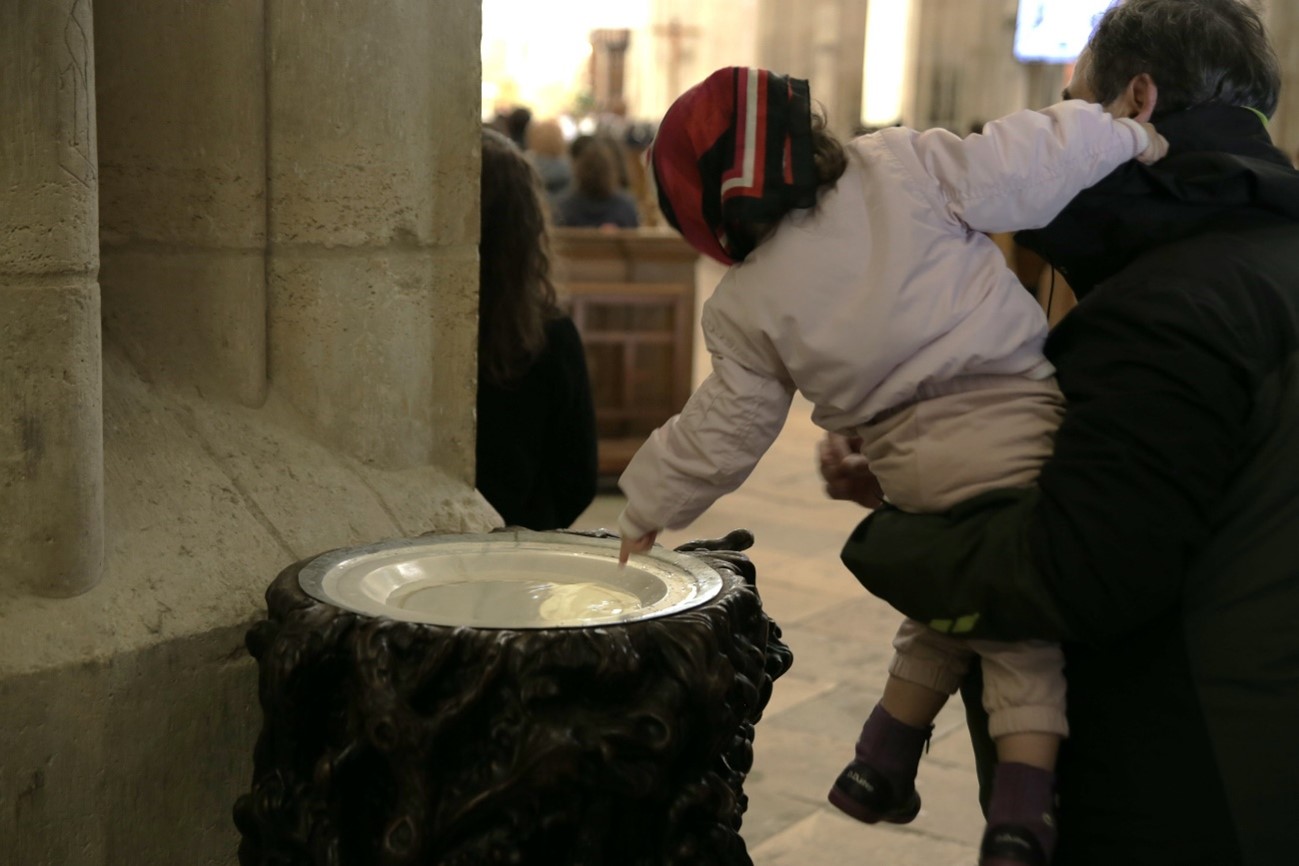
Parents, through their example and teachings, are the fundamental pillar in their children’s religious development.
Vessels of holy water are often placed at the entrance of Catholic churches, so it is the first thing the faithful do upon entering. We also find blessed water in Orthodox churches. It is a sign reminiscent of baptism and symbolizes purification and protection. (St. Michael’s Roman Catholic Church).
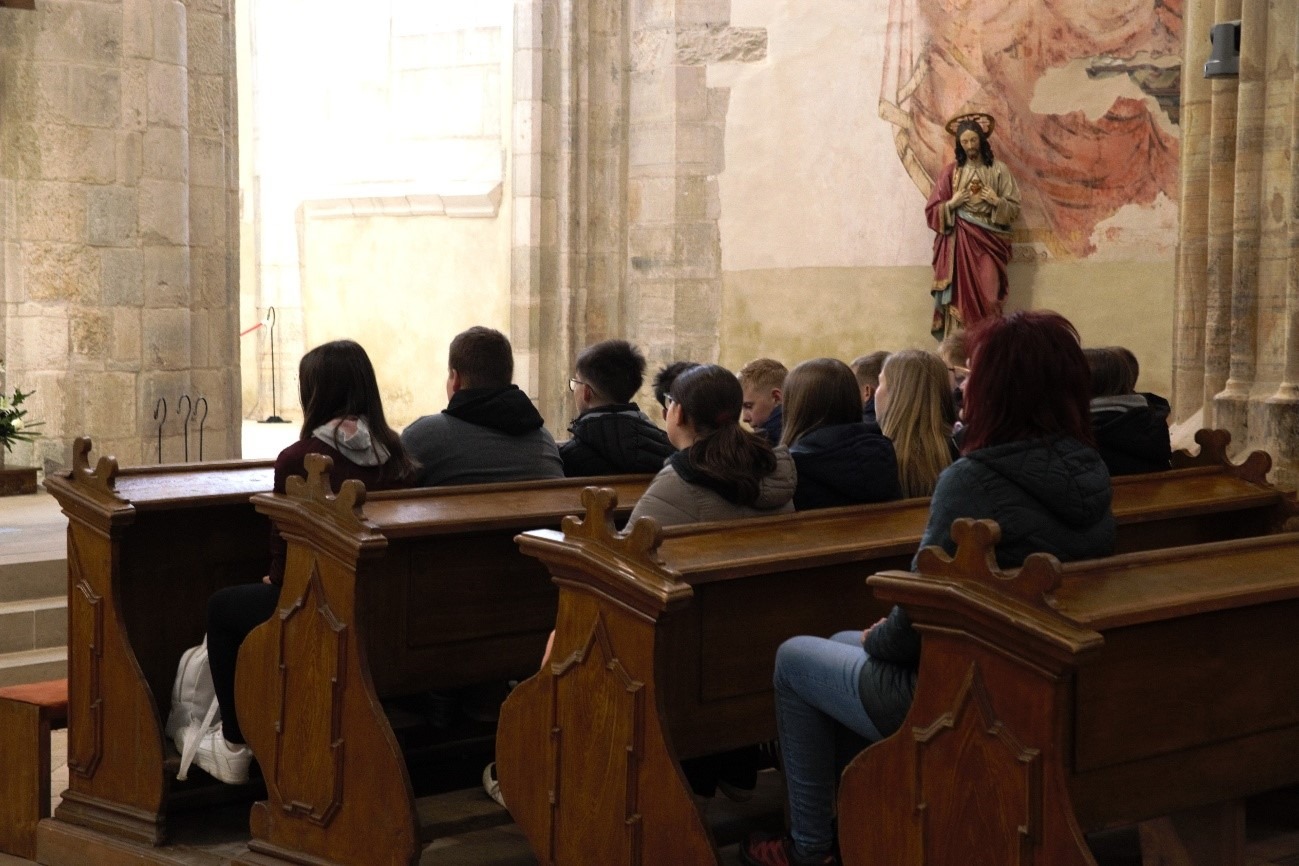
Baptism, Eucharist and Confirmation are the sacraments of initiation in the Catholic and Orthodox Christian tradition. Reconciliation, Marriage, Ordination and Extreme Unction are the other four.
This group of young people remained at St. Michael’s Church after Sunday Mass. This is the age at which believers typically confirm their faith, after receiving catechism. Protestant religions only have two sacraments: Baptism and Eucharist.
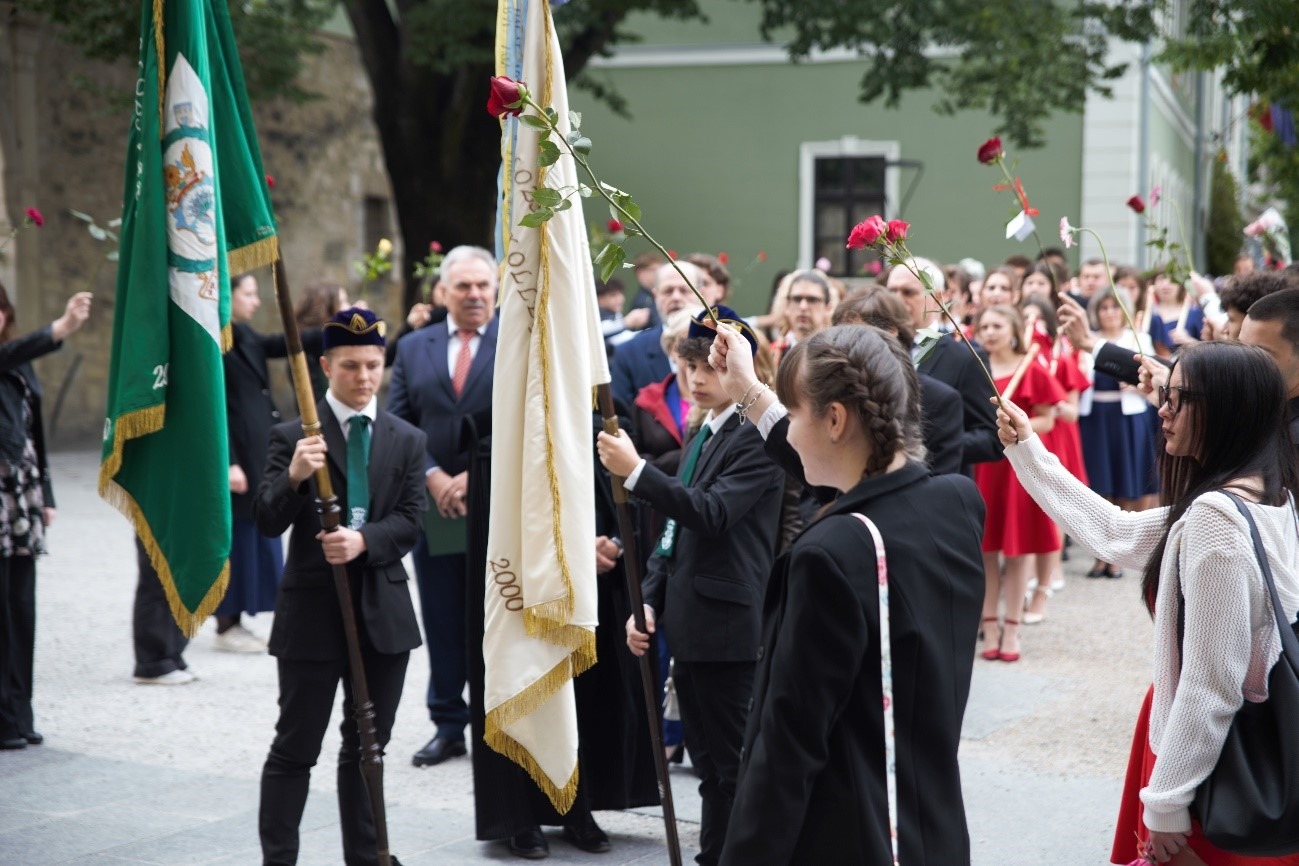
The final year students at the Reformed Theological Secondary School march from the school to the adjacent Reformed Church to celebrate their graduation ceremony on May 31st. For Protestant denominations, education is a fundamental pillar of intellectual and religious development. Also, during this ceremony, the Bible is handed over to the next graduating class
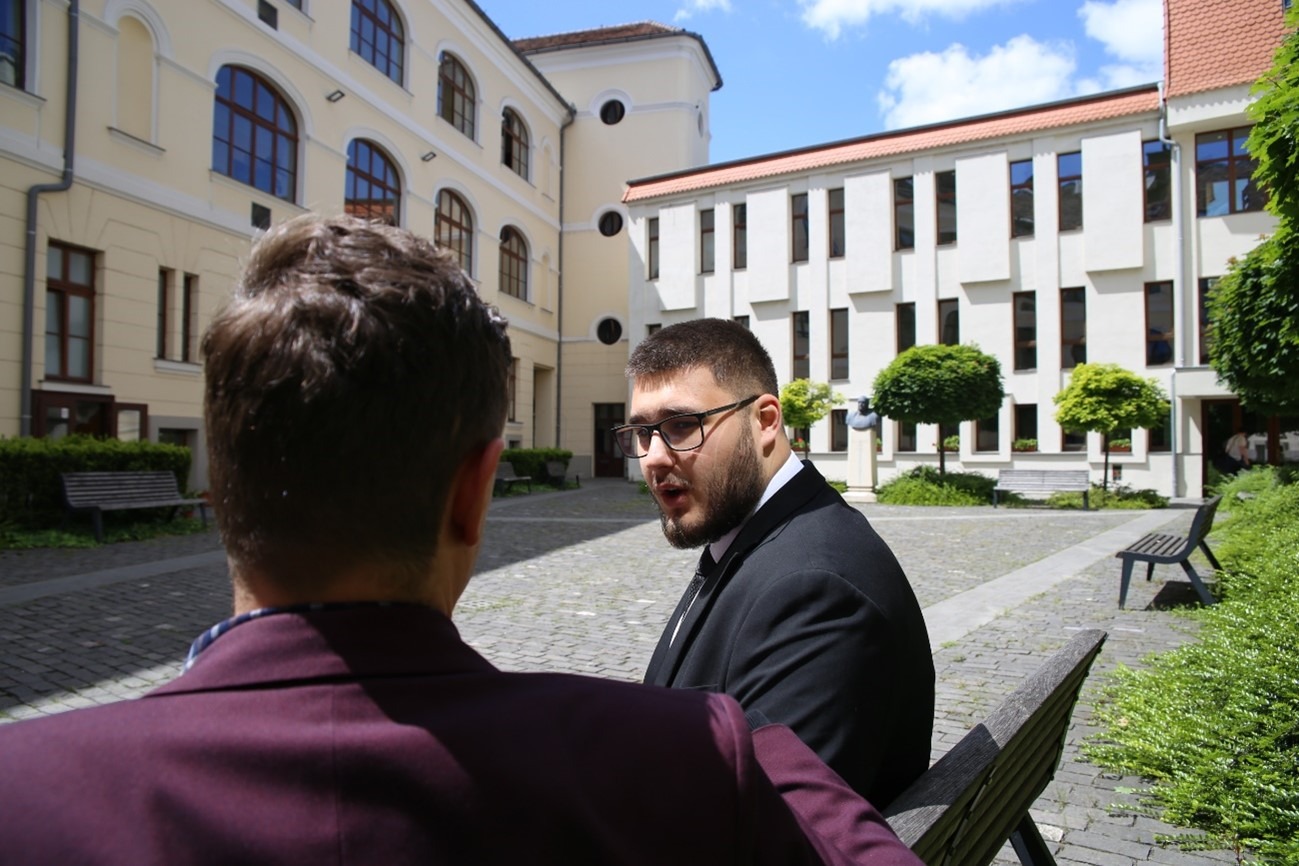
Dávid (right) and József (left) are friends and classmates at the Protestant Theological Institute of Cluj. Dávid is a first-year student, while József hopes to soon begin his ministry as a Reformed pastor. Three branches of Protestantism are studied at this institute: Reformed, Unitarian and Lutheran/Evangelical. 90% of Protestants in Cluj are Reformed
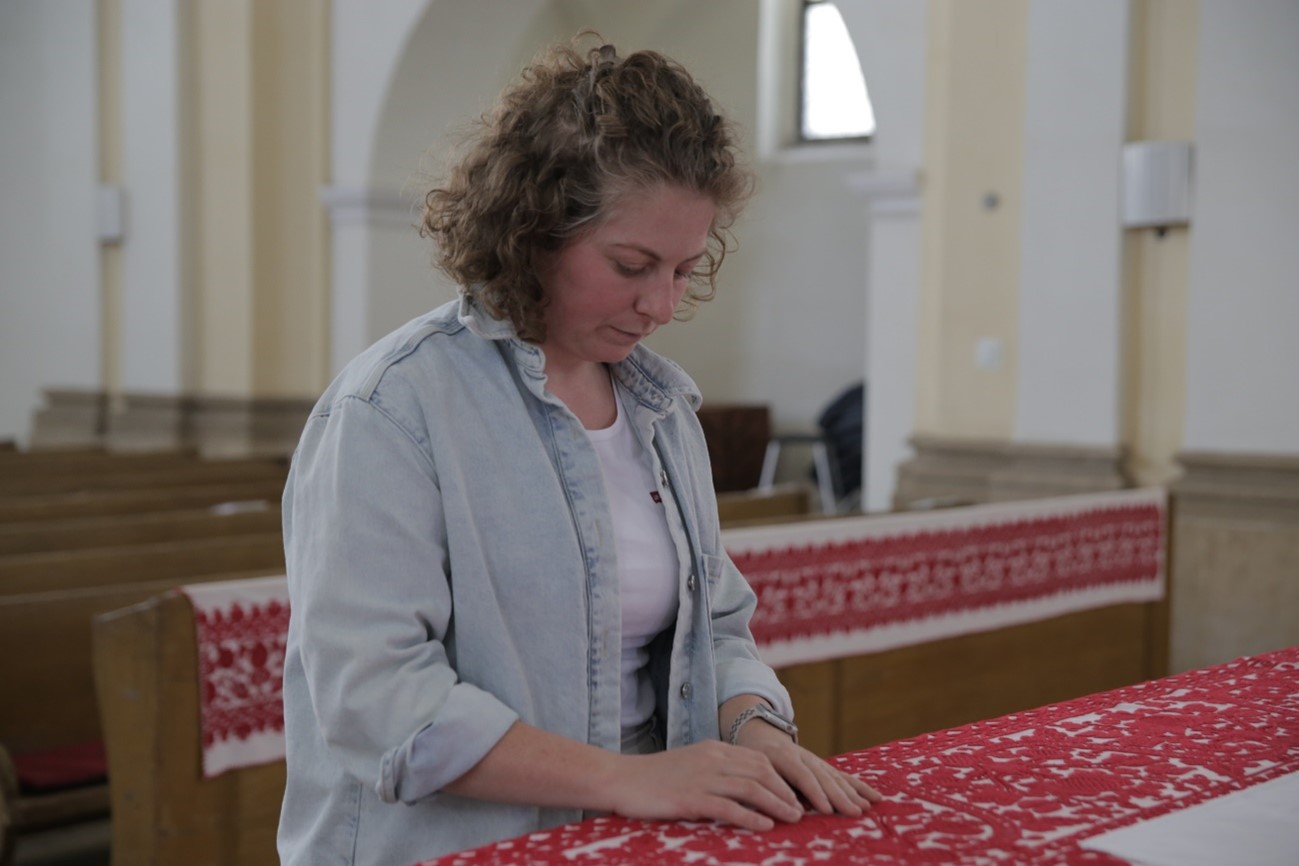
Julia Jobbagy is one of the ministers of the Unitarian Church, which is linked to the John Sigismund Unitarian Academy. This Protestant denomination emerged in the 17th century in Transylvania and defends, unlike other Christian branches, that Jesus Christ is not God himself; that is, it refutes the doctrine of the Holy Trinity. Unitarianism has about 3,000 followers in Cluj-Napoca.
THE FELT RELIGION
Religion is a personal matter that concerns the individual. It is based on a direct relationship between the believer and his god. It is in prayer and listening to the divine word that the believer finds the reason for their faith.
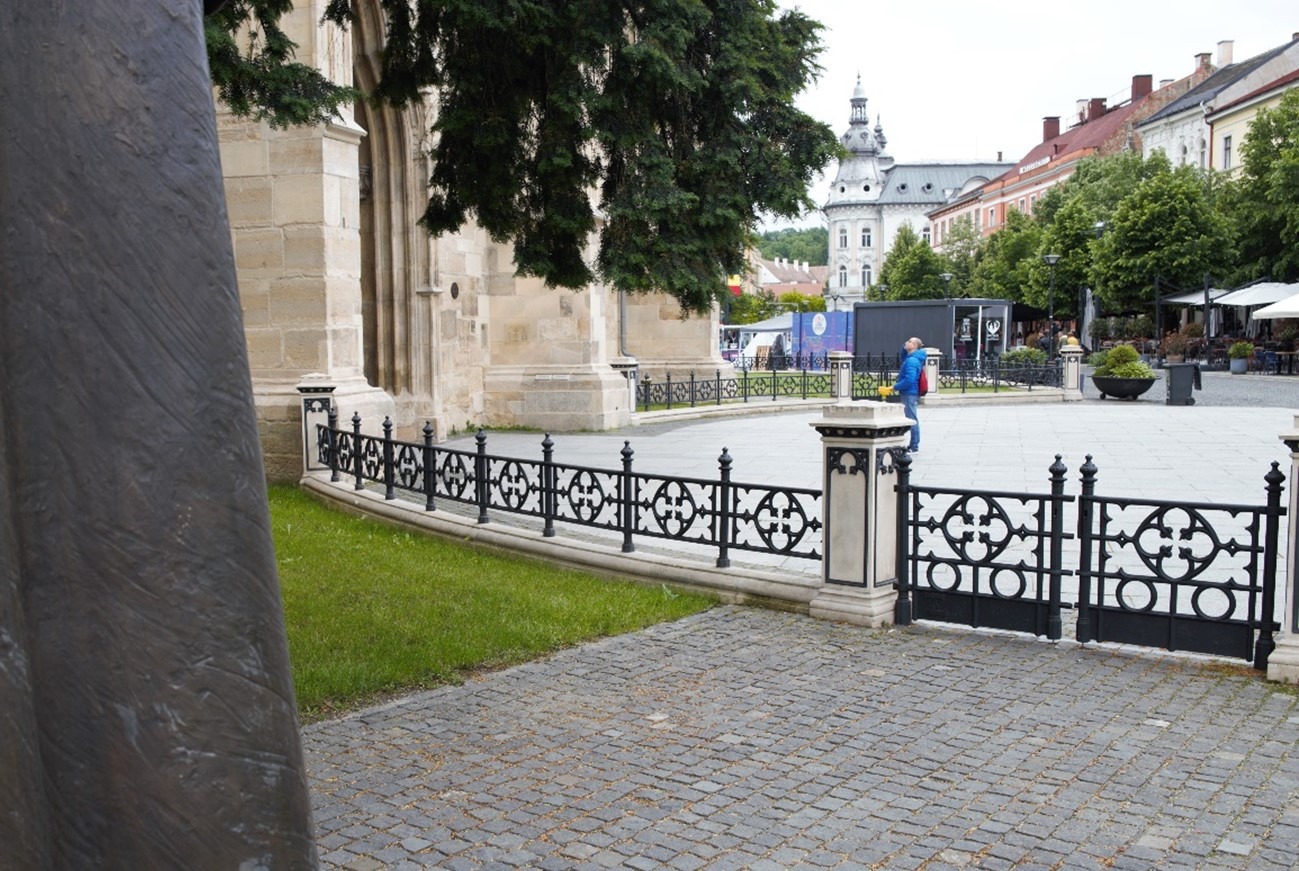
Deep respect —and sometimes even fear— for divinity is present in the lives of many believers, for example, in moments like this. A parishioner stops just in front of the entrance of St. Michael’s Church, removes his cap and bows before entering the «house of God».
The gravity of sacred temples is also evident in the Orthodox Church, where access to the altar is restricted to men blessed by the priest.
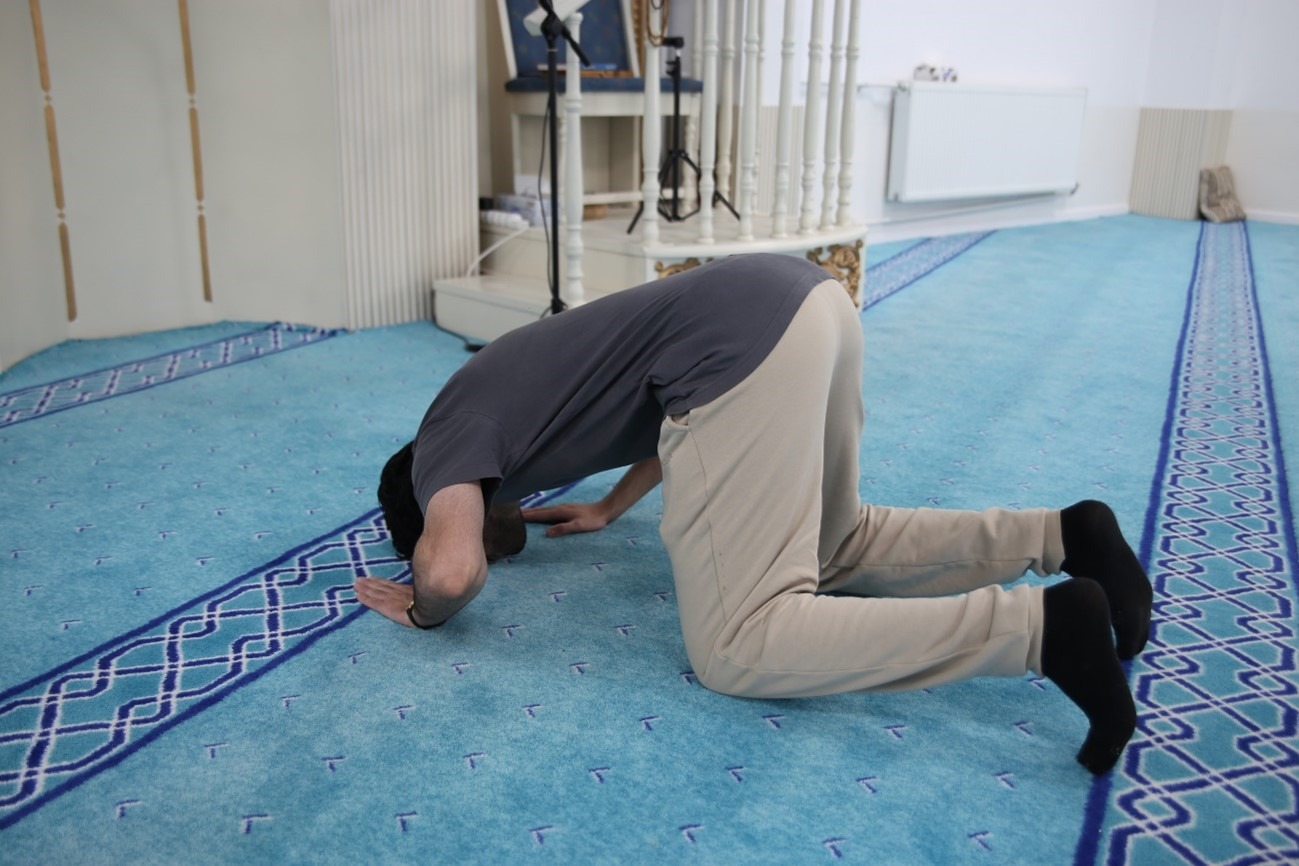
Among the five pillars of Islam that every Muslim must observe is ritual prayer (Salat). This involves performing five prayers a day facing Mecca.
Aymen is a young Moroccan medical student. With his fast-paced life, coming to pray at the mosque brings him closer to peace in his heart and mind. His orison reminds him of the smallness of human beings and their need to surrender to God’s plans and love their neighbors. (Mosque of Cluj. Islamic & Cultural League of Romania.
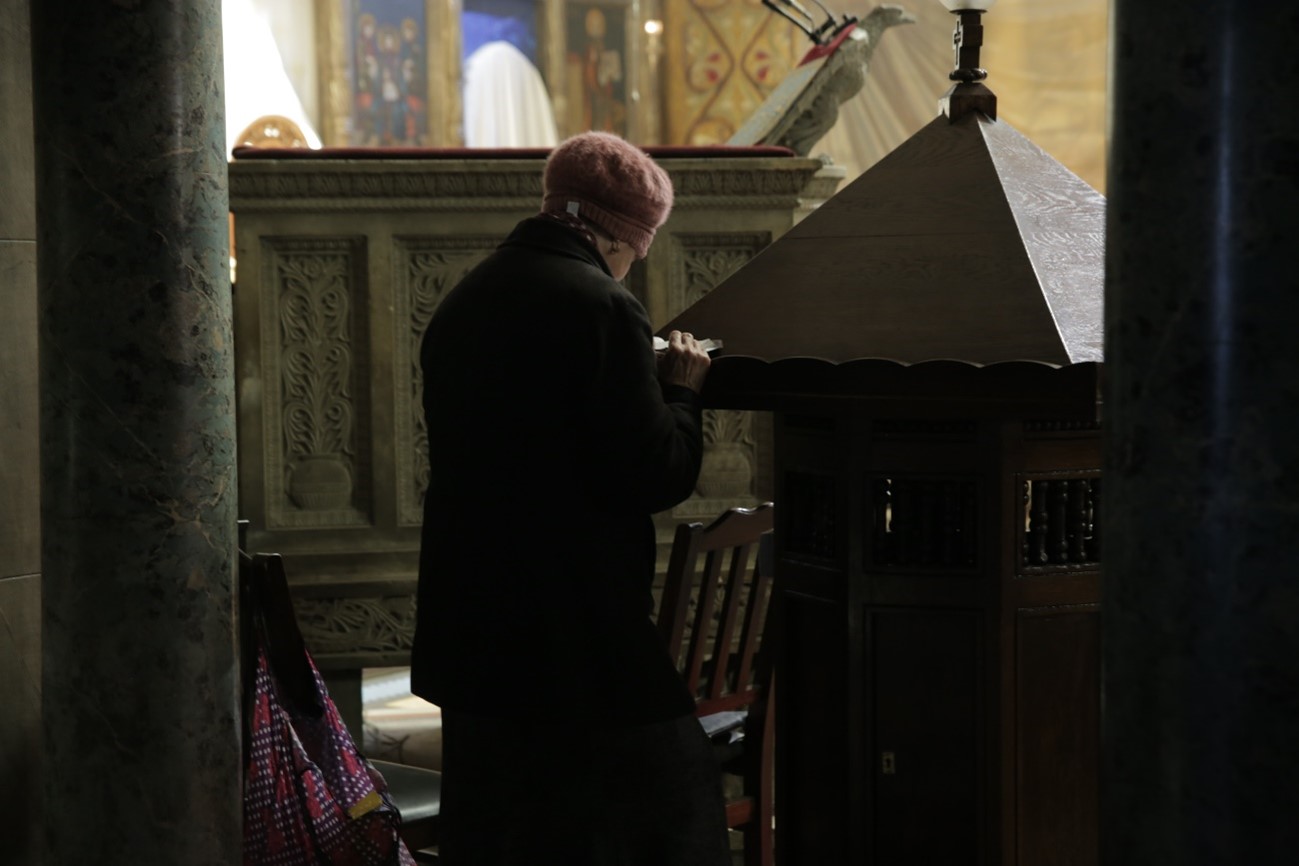
A woman read passages from the Bible in the Metropolitan Cathedral of the Assumption of the Virgin Mary.
Reviewing sacred texts allows them to revisit the divine word, discover new perspectives and reaffirm their faith. Careful personal study of the Bible is one of the essential elements of Protestantism. The Seventh-day Adventist Church holds group workshops every Saturday to read chapters from the Holy Book.
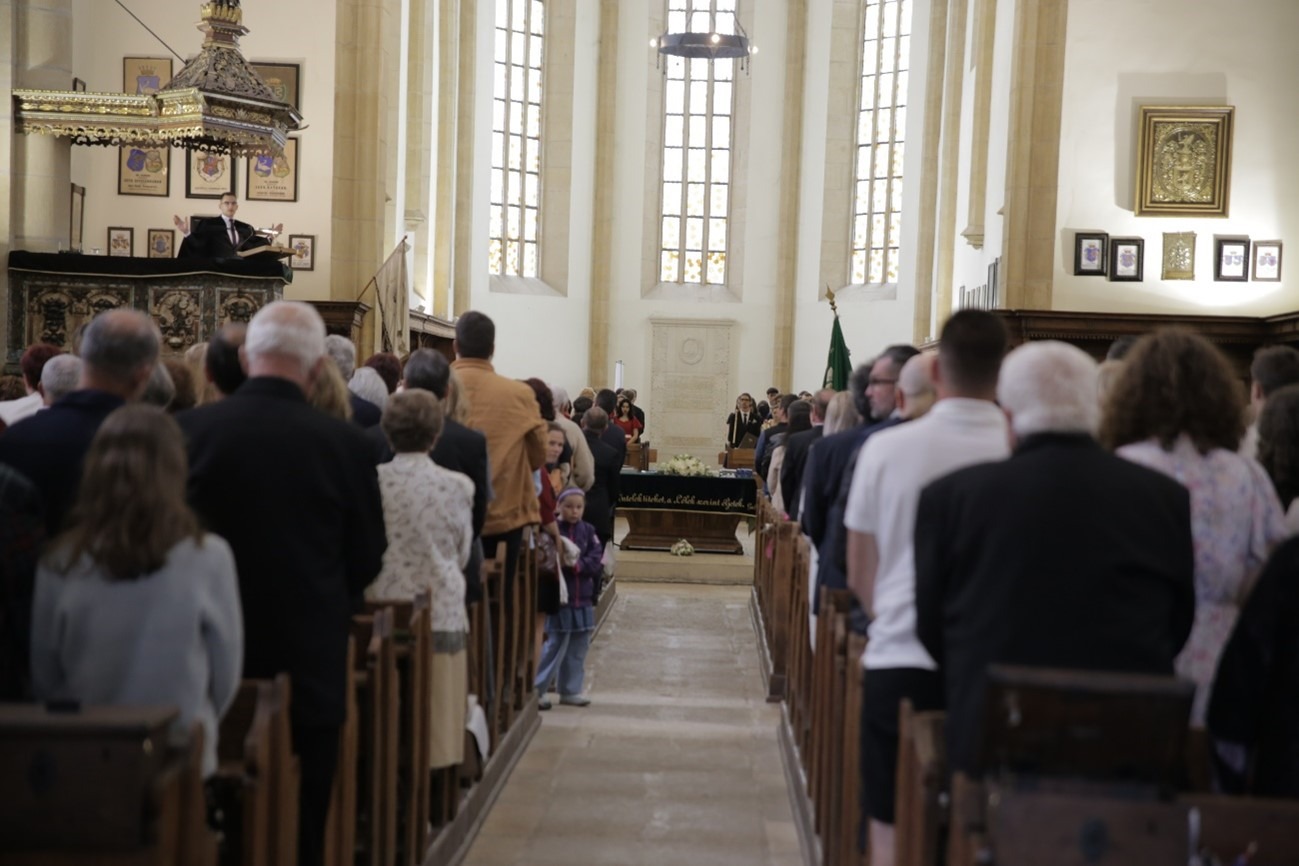
Pastor István Telegdi delivered a sermon during the graduation ceremony for students at the Reformed Church.
Attending religious services is prescribed —to a greater or lesser extent— in all religions as a way for individuals to strengthen their faith and religious devotion. For Unitarian minister Julia Jobbagy, going to church is not so important, and true religious sentiment is practiced in everyday life.
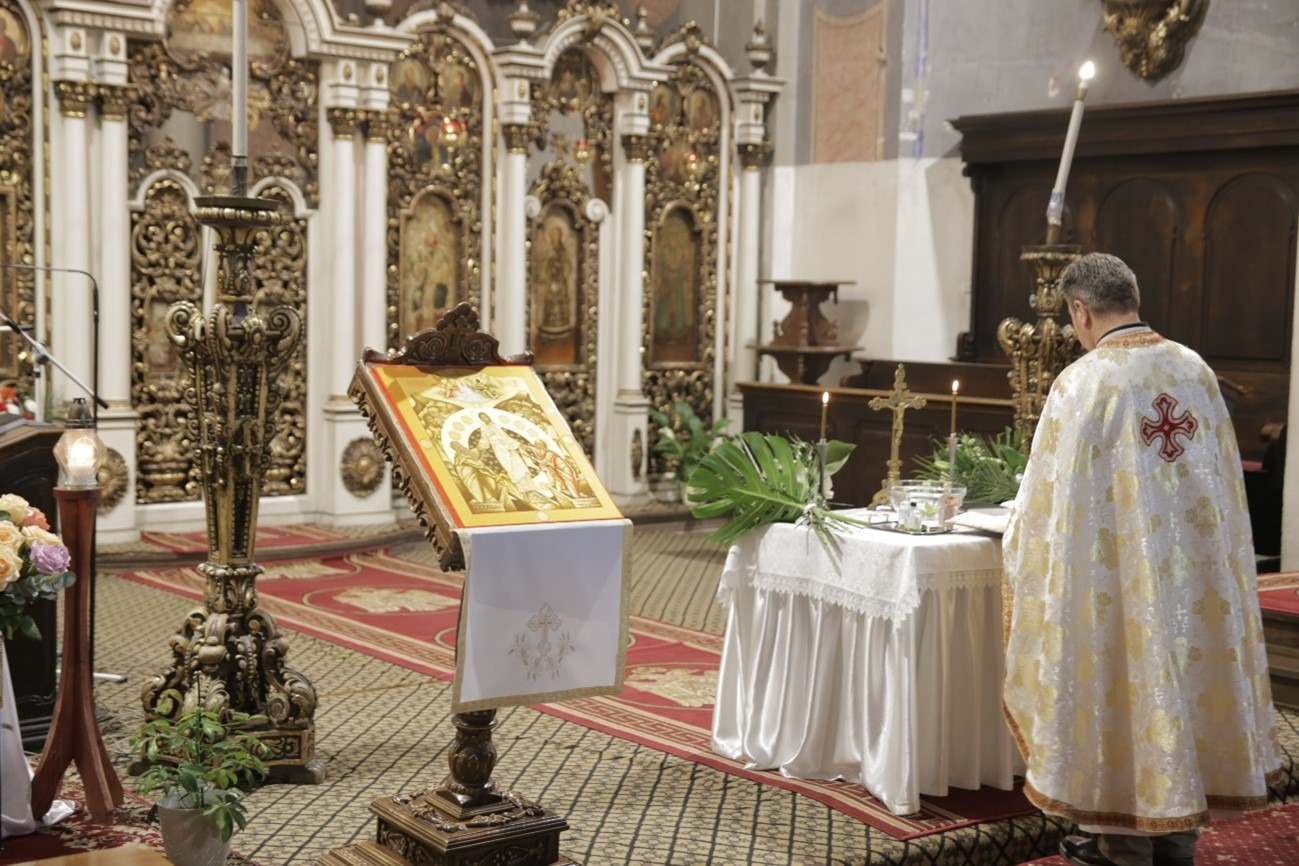
The Greek Catholic priest during part of the baptism celebrated in the Cathedral of the Transfiguration.
In the Catholic and Orthodox traditions, the priest acts in a sense as an intermediary between God and the faithful. However, in Protestant traditions, a direct relationship with the deity is defended, so the priest does not have as much of an aura of sacredness. In the absence of rabbis, synagogue services may be led by a member of the community as a «worship officiant».
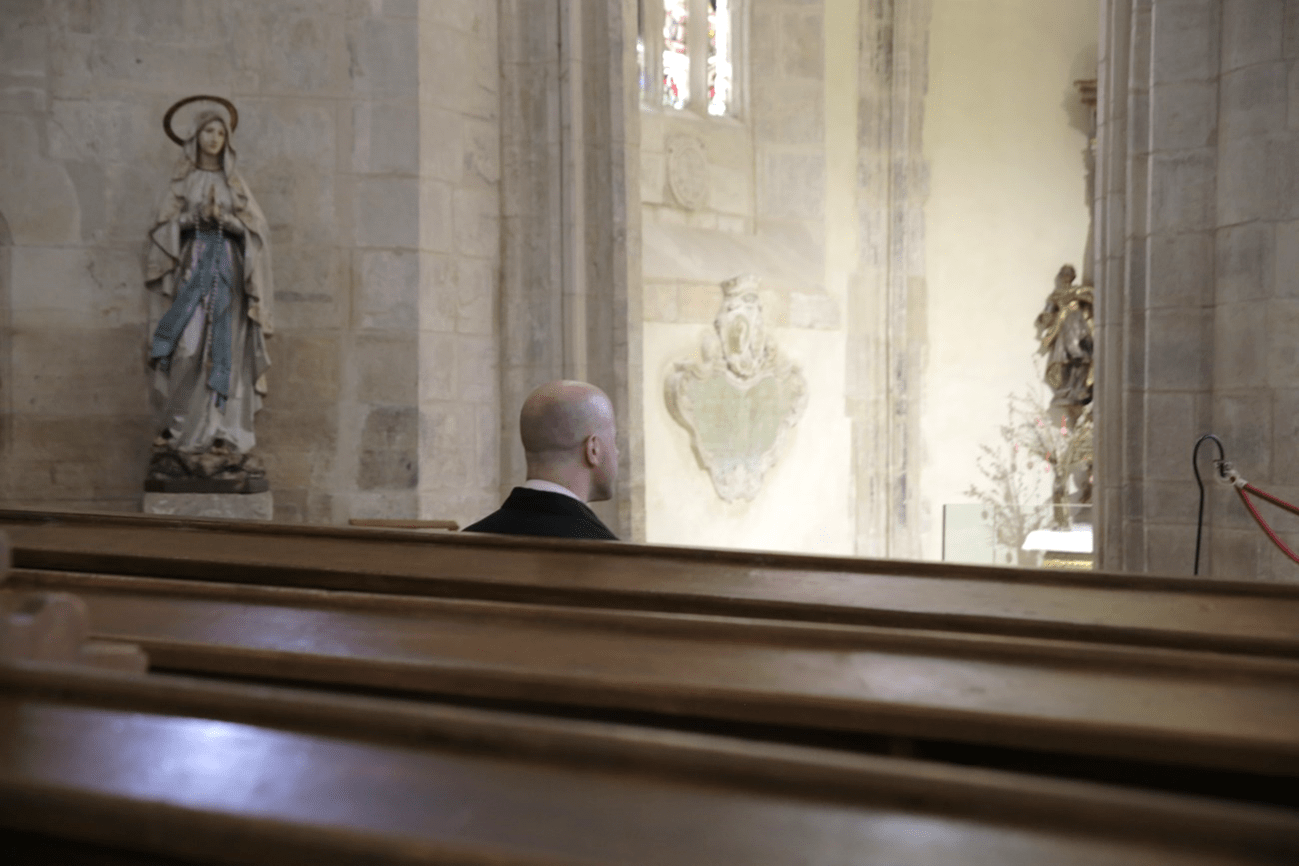
A man praying in St. Michael’s Church.
The presence of sculptures of Mary, Jesus Christ and the saints is common in Catholic churches. However, this practice is not acceptable in the eyes of the Orthodox Church. As Father Iosif told me: “It carries the danger of idolizing a figure”. Therefore, in these churches, we only find icons and mosaics
A CELEBRATED RELIGION
Religion isn’t just about praying and observing traditions. Within religious spaces, a multitude of events and activities take place that, while not directly related to faith, serve to create a sense of community. A concert, a snack, an excursion—everything serves as an excuse to strengthen the bonds between people.
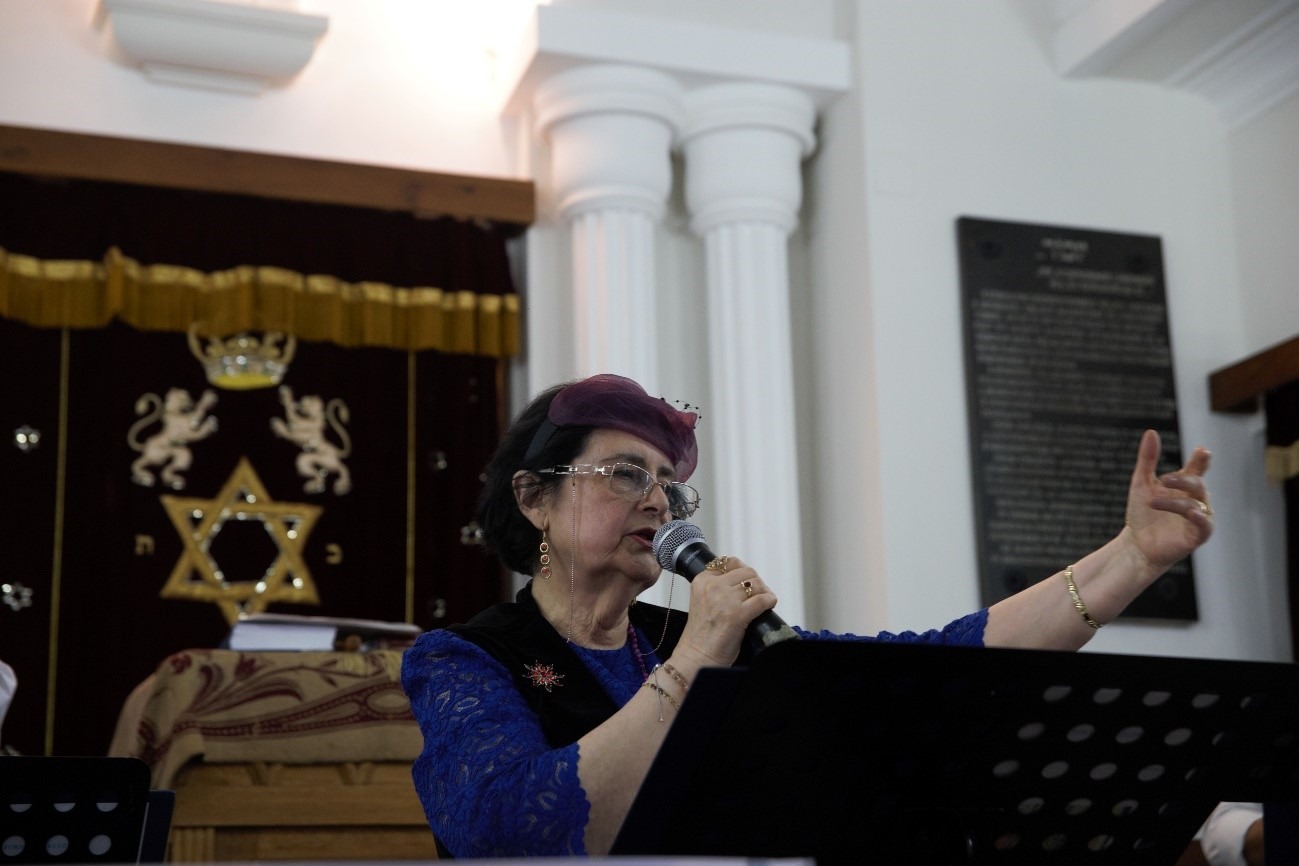
Ita, singer of the Mazel Tov Klezmerband, during a concert given by this Yiddish music group at the Neolog Synagogue on May 29.
The Jewish community has barely 150 members in Cluj-Napoca. This is due to the mass deportations suffered by this community in this part of Romania during World War II. Before the conflict, the number of Jews was 18,000.
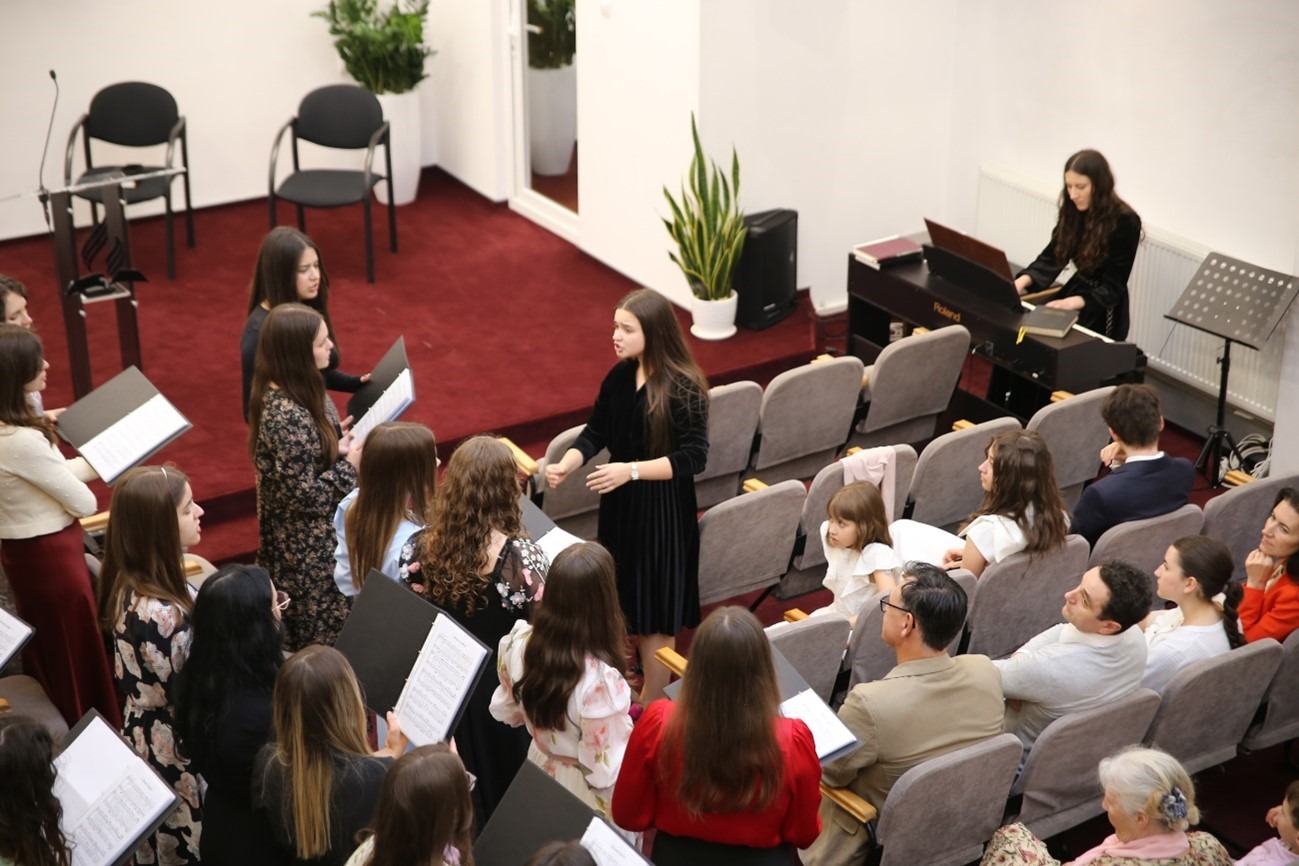
A group composed of young people sings at the Adventist Church of Hope. They are members of the Emmaus Choir, formed by students from Maramures County who participate in Adventist activities.
This neo-Protestant denomination was founded in the United States in 1844 and, among other things, believes in the Second Coming of Jesus Christ. Nearly half of its members are vegetarians, as they cannot eat pork. They also consider nature a way to connect with God. Therefore, they carry out environmental awareness and protection programs.
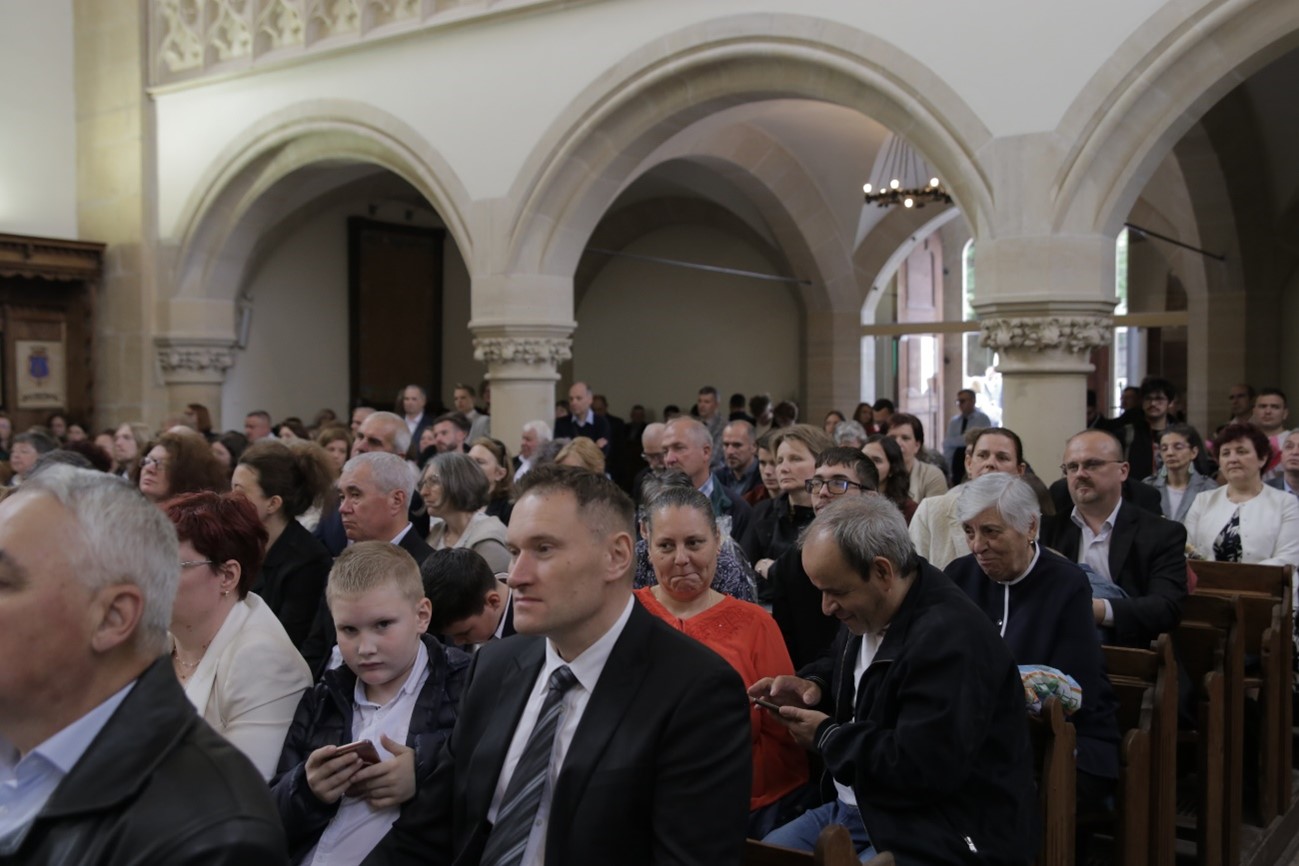
Parents and family members of the graduates listen to the speech by the principal of Reformed Theological Secondary School.
For a believer, every important moment in their life is connected to religion. And, regardless of whether people have faith or not, these types of celebrations become major social events for everyone. That same day, May 31st, the students of the John Sigismund Unitarian Academy also celebrated their graduation ceremony at the Unitarian Church.
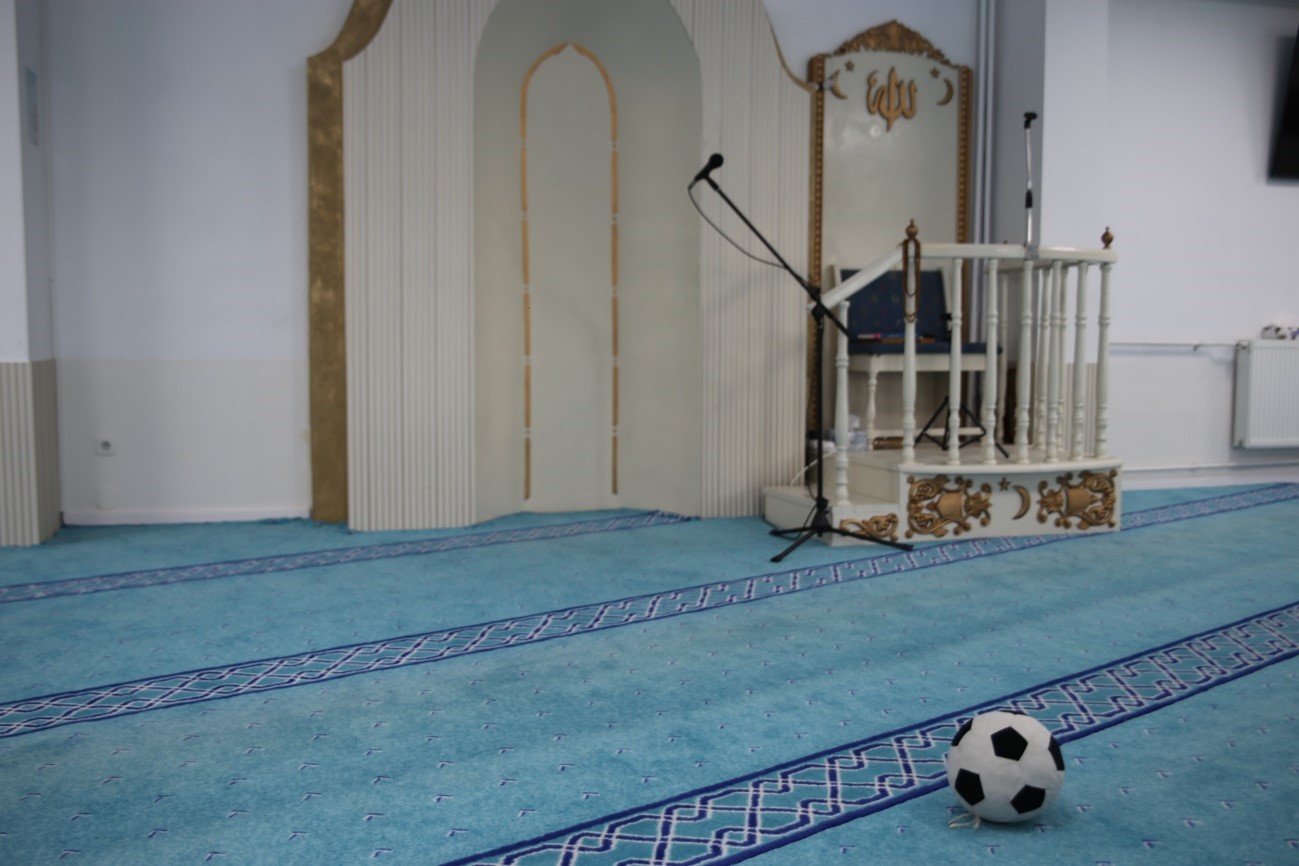
After one of the five daily prayers, the children —a boy and a girl— of one of the worshippers begin playing soccer inside the mosque.
Sacred temples are also open to children, but they cannot possibly understand what is experienced there. Therefore, as Aymen tells me, children must be treated with «pity». At St. Michael’s Church and the Unitarian Church, there are spaces for children to play during religious services.
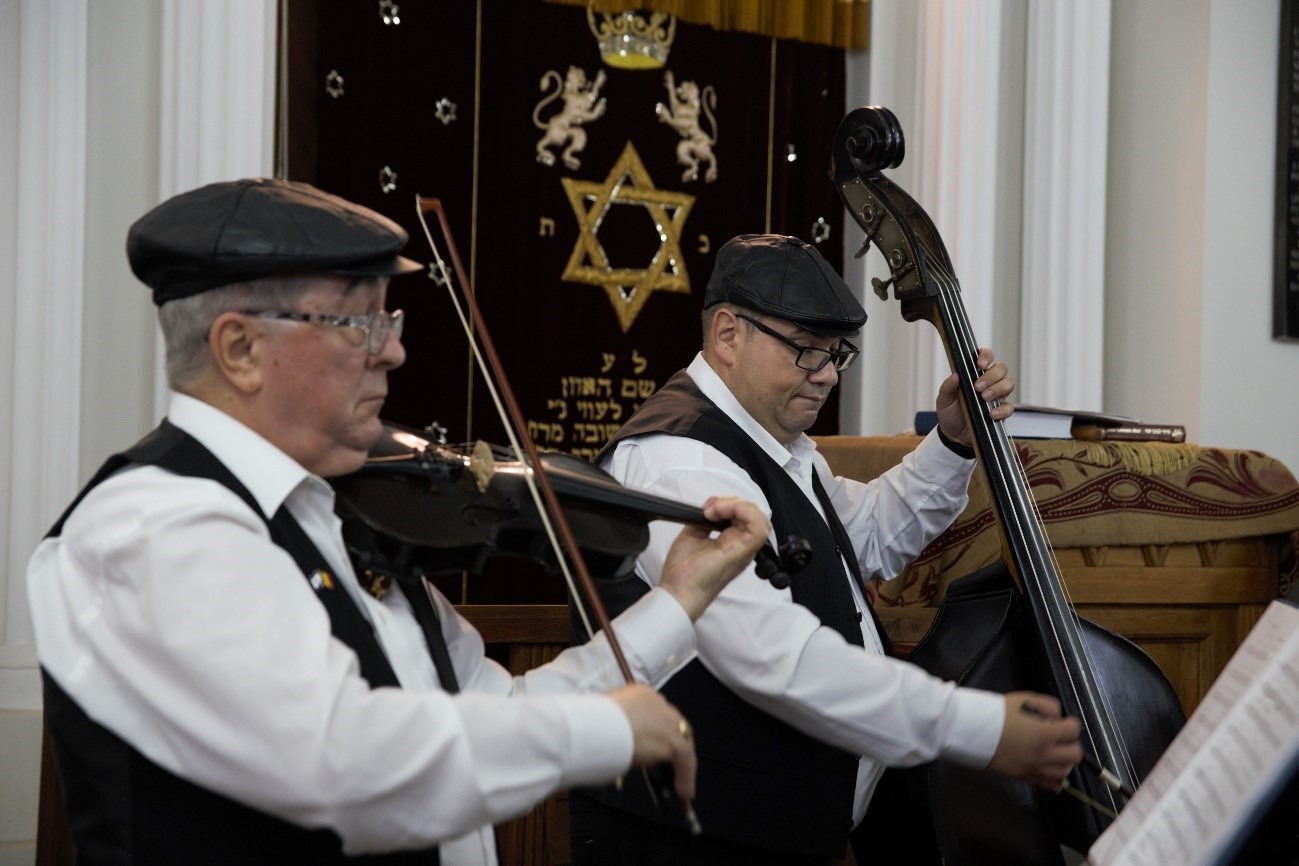
Currently, religious services at the synagogue are held every Saturday (Shabbat). There is only one rabbi in Cluj, but he lives apart from the rest of the Jewish community. So Mr. Mugur, a tenor who is also singer in the band, serves as the worship officiant.
In the past, Neolog Synagogue represented the modernizing sector of Judaism in Cluj. Now, it is the only one that continues to function.
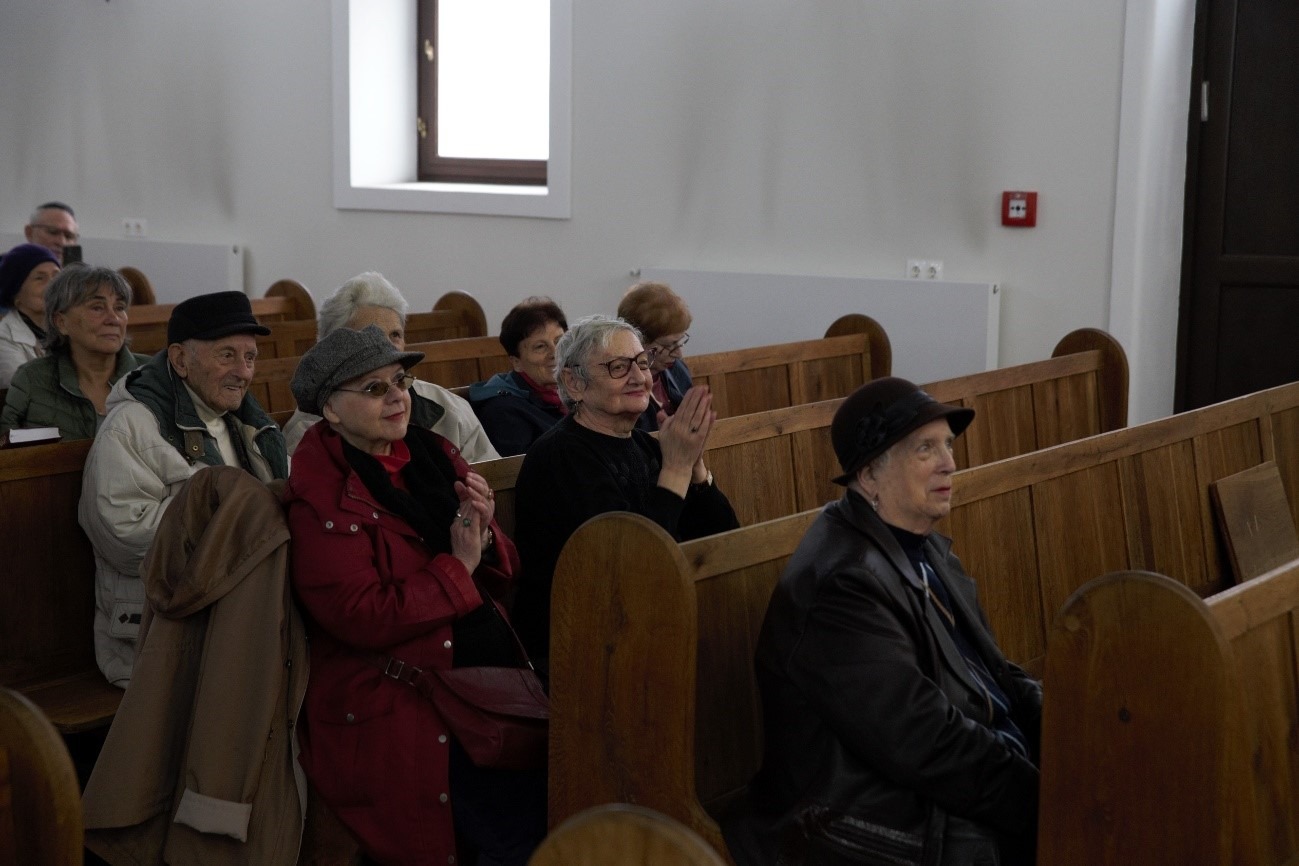
Attendees of the Yiddish music performance.
After the concert, Mr. Mugur gave a lecture on Jewish culture, followed by refreshments in an adjacent home. Events like this allow the Jewish community to come together and strengthen ties between members of a very minority ethnic-religious group in Cluj
A SHARED RELIGION
All religions share the desire to find peace for the soul and to be better for one’s neighbor every day. In this world where it seems illogical to be a believer, many people continue to pray to their god to fulfill these and other desires.
In Cluj-Napoca, a multitude of different religious sensibilities coexist. But, in the end, they all converge on the essential: the goal of giving life transcendence. It doesn’t matter whether one is a Unitarian Christian or Greek Catholic, whether one is Jewish or Muslim. They are all united by the same faith: the faith that a higher being guides their steps and that there is life after death. This is the religion of Cluj. This is the religion of all believers around the world.
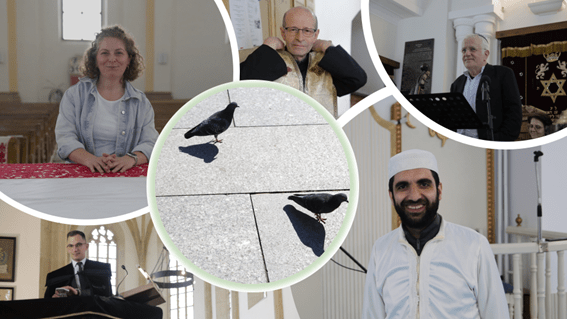
From left to right and from top to bottom: Julia Jobbagy (Unitarian Church minister), Friar Ivan Iucian (priest of the Greek Catholic Cathedral of the Assumption), Mugur (synagogue worship officiant), Ghaleb (mosque imam) and István Telegdi (Reformed Church pastor).